Feeds:
Posts
Comments

Posts Tagged ‘education’

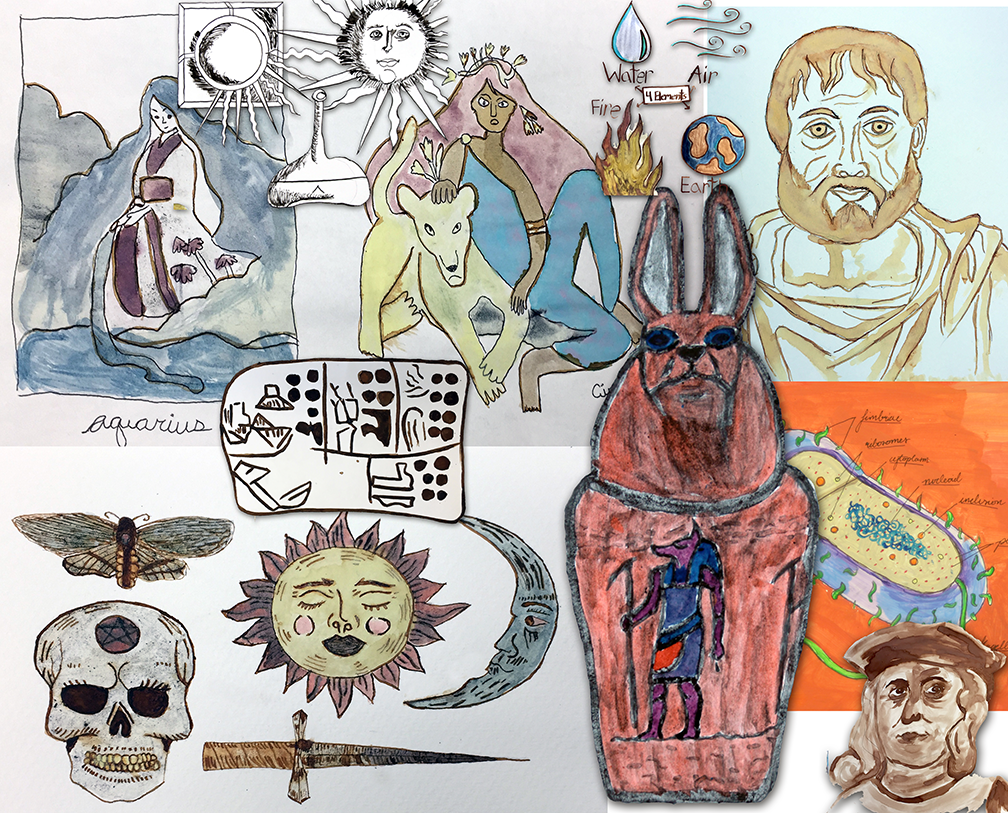
A collage of student-created illustrations using homemade ink and pigments, such as cochineal for the reds, Prussian blue for the blues, and iron-gall ink for the sepias.

It has been some time since I have written a blog post for this site. My work continues at Clark Planetarium, where I don’t get many opportunities these days to pursue the history, mineral sources, origins, properties, uses, extraction, refining, and hazards of the chemical elements. That is, after all, the main purpose of this blog site even if I have occasionally gone on tangents of global citizenship or science education in general. As a result of setting this site aside for several months, viewership has dropped off even if my passion has not.
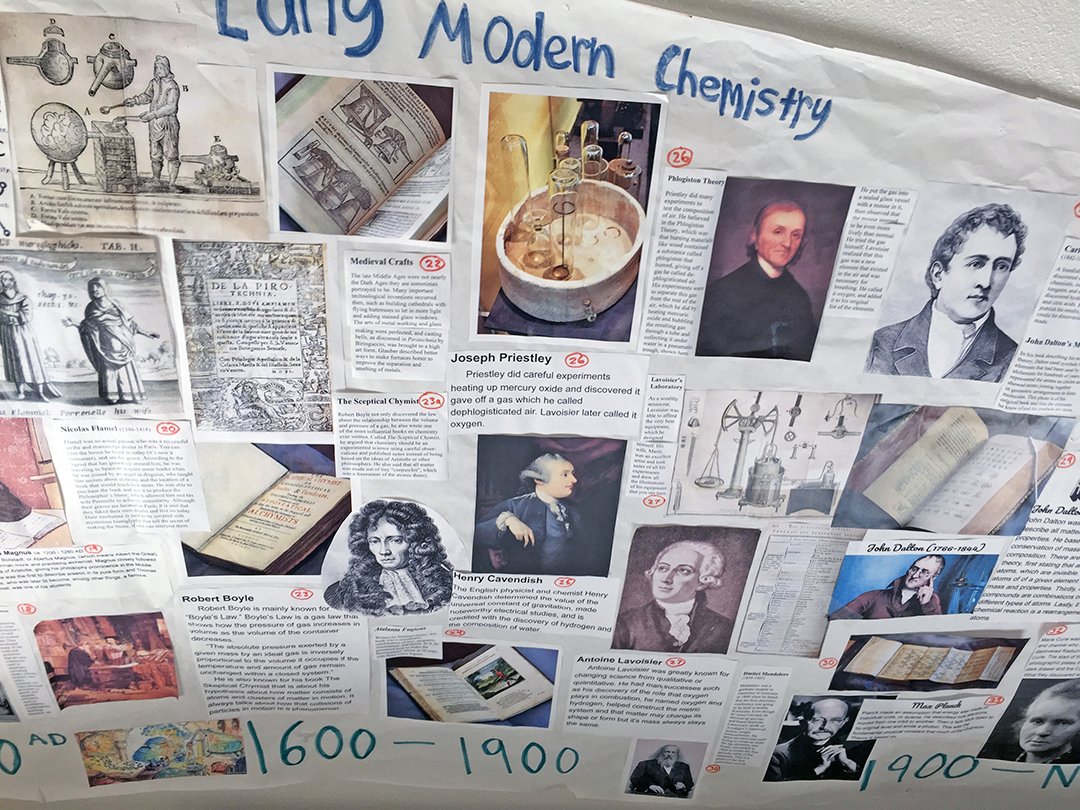
Part of a full-class banner on the history of chemistry, with each student assigned to do one image and caption.

I continue to work toward my doctorate, with my dissertation proposal going through several drafts this year. I wrote a longer version of the proposal (the first three chapters of the final dissertation, with chapter 3 in future tense) and sent it to my advisor in September. I wanted it to appeal to practicing teachers, but my advisor’s response was that it needed to be re-written in academic language and drastically shortened to less than 15 pages per chapter. Although I resist writing something that only a few Ivory Tower academicians will ever read, I know it must pass the Internal Review Board once it passes my committee, so I have done as he requested. I combined all three chapters together with my appendices, and my advisor has now completed a line-by-line edit. I am working through these suggestions over the next few days as schools shut down for Winter Break and our outreach schedule at the Planetarium eases off.
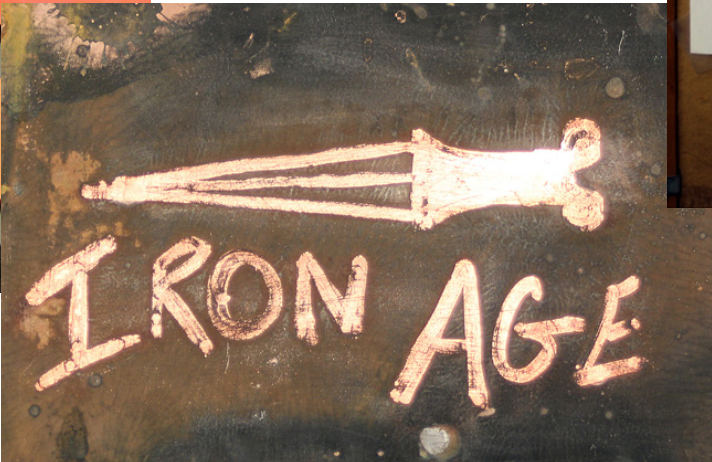
A copper etching done by painting fingernail polish on a copper sheet, then placing in a sealed container with salt and vinegar potato chips with a little extra salt and vinegar. Once corroded, the nail polish is removed with acetone. This was for a project on the iron age for the history of chemistry unit.

The core of my dissertation, as it is for any, are the research questions. These are mine:

RQ 1: To what extent can STEM teachers implement student-created digital media projects (SCDM) with three dimensions of choice to enhance student creativity, engagement, and content mastery?

RQ 2: To what extent can informal STEM education institutions develop and successfully implement a science communication contest to extend contact time and improve student motivation and science learning?
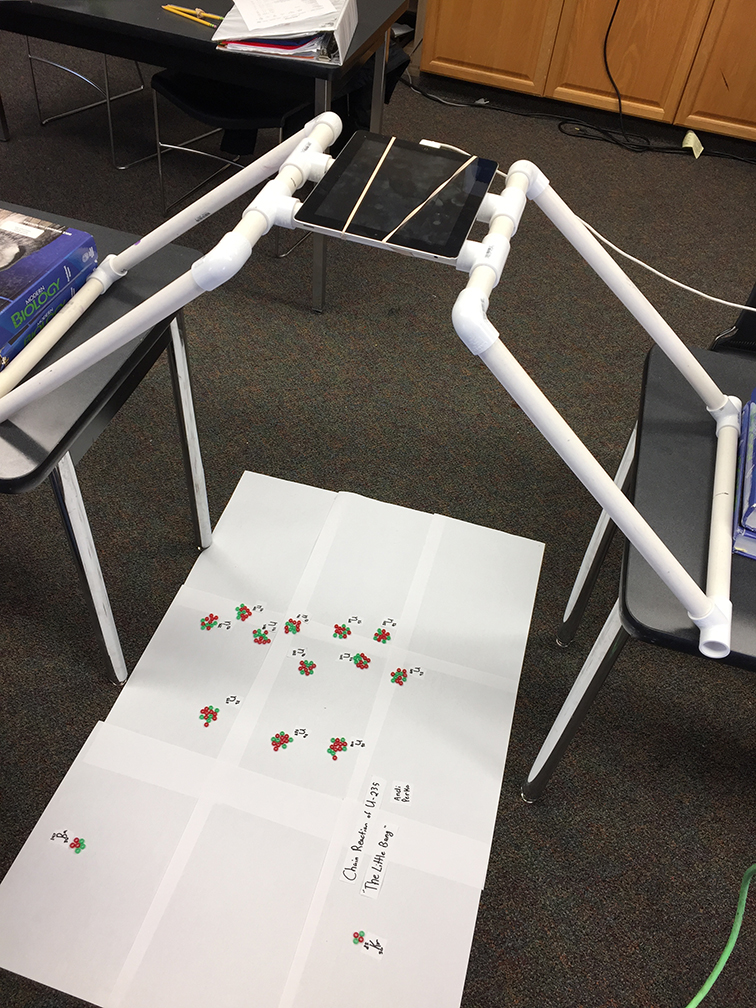
A stop-motion animation set-up for showing a chain reaction in a unit on nuclear chemistry. This frame shows three neutrons about to initiate the second order nucleus splitting.

As I see it, based on 33 years of classroom teaching experience, there are two problems of practice in STEM education (including chemistry). The first is the problem of student engagement, which I have talked about before on this site. I hope to see how student-created digital media projects can help enhance student engagement and lead to increased creativity, quality, and content mastery. This has been the main thrust of my research all along. As a planetarium educator now, I also see a problem of practice in how to increase our impact as an informal science education institution. We visit 6-8 schools per week (I average about two) and we can only teach one class at a time for about 45 or 60 minutes depending on the lesson, and can only visit a school once every two years (charter schools once every three years). That means we are missing over half of Utah’s sixth graders each year. We visited about 28,000 students this last year, and that is an exemplary task, but how much impact can we really have in so short and infrequent a time?

The second question implements the first through a science communication contest we are calling the Cosmic Creator Challenge, where students create their own digital media projects on the sixth-grade space science standards for Utah. You will notice in my first research question that I am using three-dimensional student choice as the experimental variable. I have not yet explained what 3D choice is on this website. Here goes:
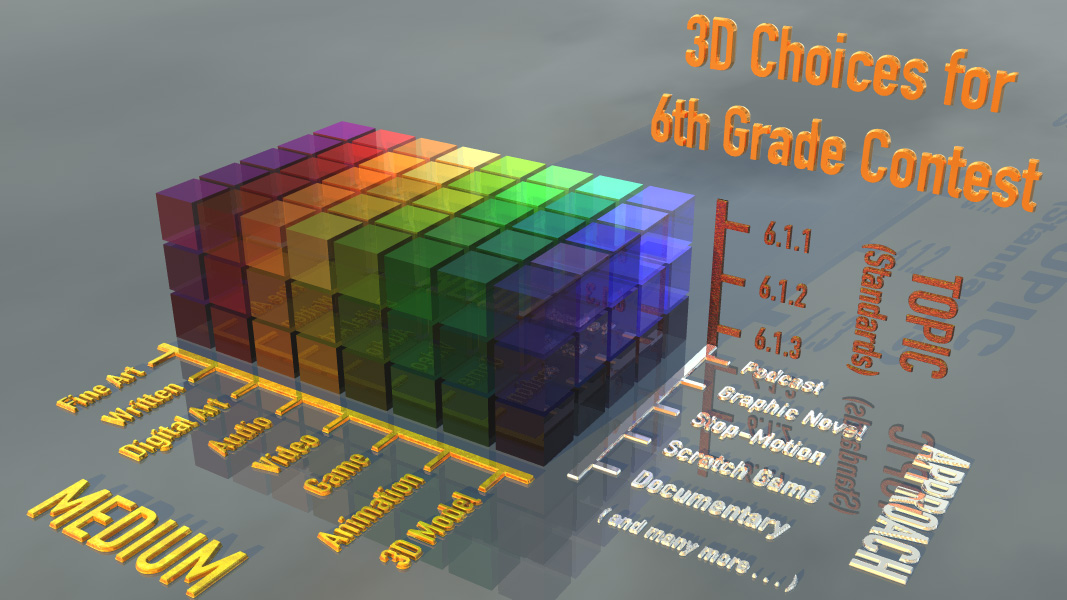
Diagram showing 3D choice for sixth-grade space science standards. The choices are the individual standards (topics), the medium, and the approach.

When students are given digital media projects as a way of demonstrating their mastery of chemistry or other STEM concepts, they have three dimension of choice. The first is the choice of topic. Usually, in project-based learning, students are able to choose a specific topic for their projects from a teacher-delineated list or as specified by subject-area standards or objectives. This is the first dimension – choice of topic. The second dimension is usually choice of approach – that is, exactly what format the project will follow. The easiest way to explain this is through the example of a video project: students can choose different video formats, such as a public service announcement (PSA), a news report, a TV commercial, a documentary, or a narrative film (with script, props, and actors). These two dimensions are what are usually given to students for a project-based learning experience.
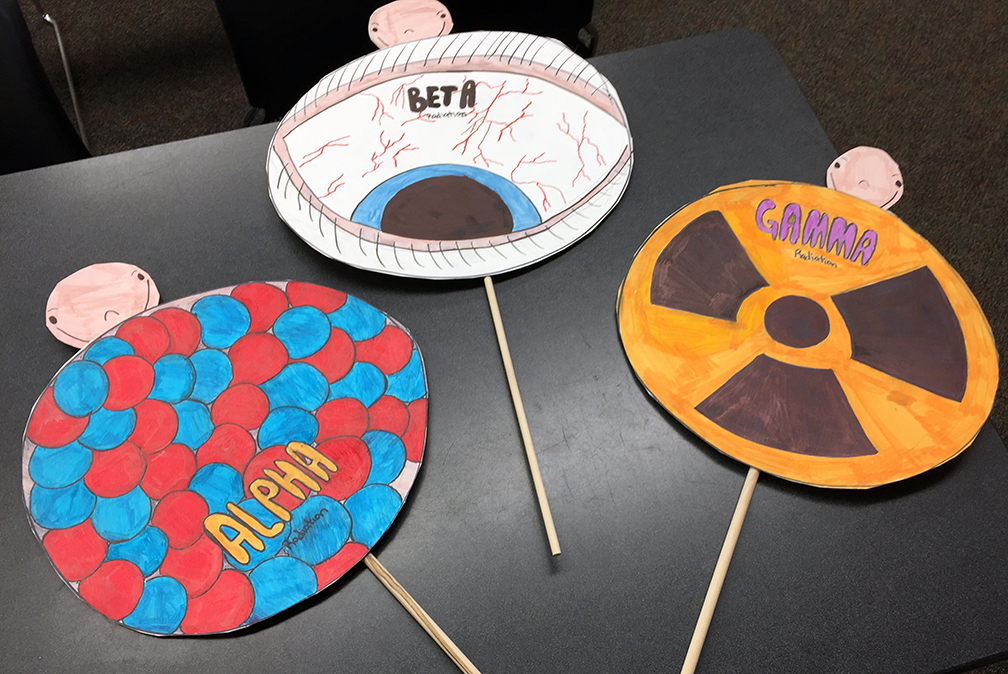
Puppets showing different types of radiations used in a student skit for a unit on nuclear chemistry.

But with digital media projects, there exists a third dimension. The choice of medium. Usually teachers choose this by having all students create a podcast or a video or a poster or a Scratch game. But what if we allow students to choose their own media type? There are many types of media now; the formats have proliferated and include digital images (pixel or vector-based); posters or infographics; desktop published documents; audio files; video files; presentations or slide shows; animations (several types, including stop motion); websites; games; and various types of augmented or virtual realities.

Once you combine all three dimensions, you have a huge number of possible choices for projects that can be based on students’ preferences, experiences, previous knowledge, and desires for learning. The potential for creativity is very high, with students coming up with projects that are unique, effective, fun, and communicate their chosen topic well. Here are just a few ideas for what my students have done in a first-year chemistry class:
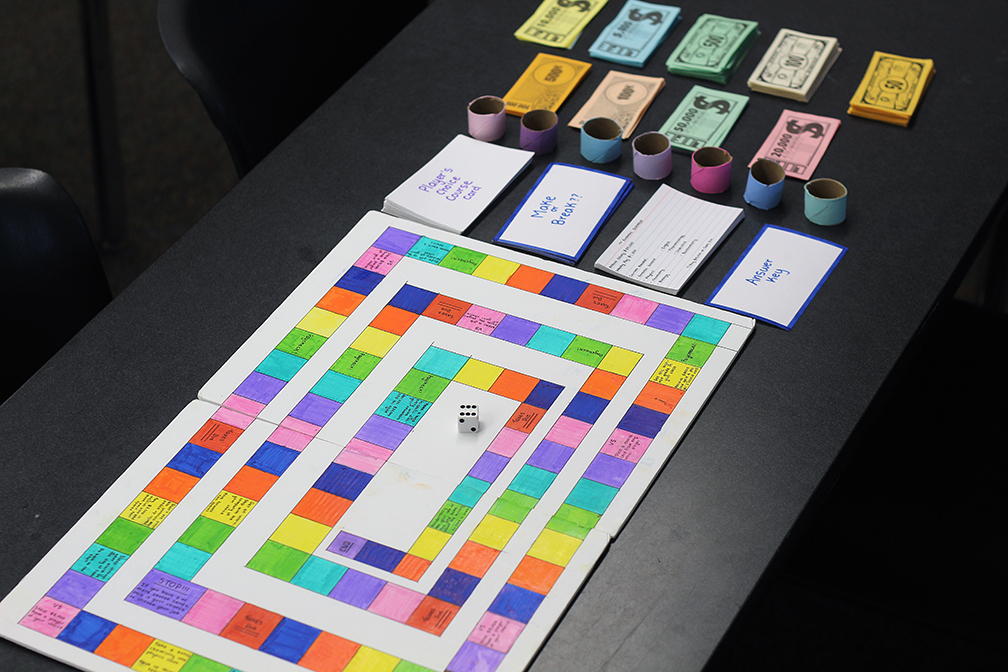
Chemistry careers game. Students start in college, pass chemistry classes, graduate, get a job, etc. similar to the Game of Life.

For our first unit on the nature of chemistry, I had a student who chose the topic of careers in chemistry and created a board game that combined aspects of several other games including the Game of Life. Students started the game in college and chose a chemistry specialty, had to pass classes with different life choices popping up, then graduate, find a job in their specialty, and work through to their first promotion while making choices along the way. In the process of playing the game, students learned about careers in chemistry. By creating the game, the student-creator had to research a great deal of information, and did so entirely through her own effort.

For a unit on the elements, students chose their favorite element (such as Thorium for an Avengers fan) and created a physical poster or infographic on the properties, uses, mining, refining, etc. of the element. They typed up text, inserted images and captions, and created a summary and crossword puzzle game for the back sides. Although the final posters were put together by hand with glue, it could have been laid out in desktop publishing or infographic software for easier editing. Other students were asked to use the poster and summary to play the crossword puzzle as their way of learning from the student-creators.
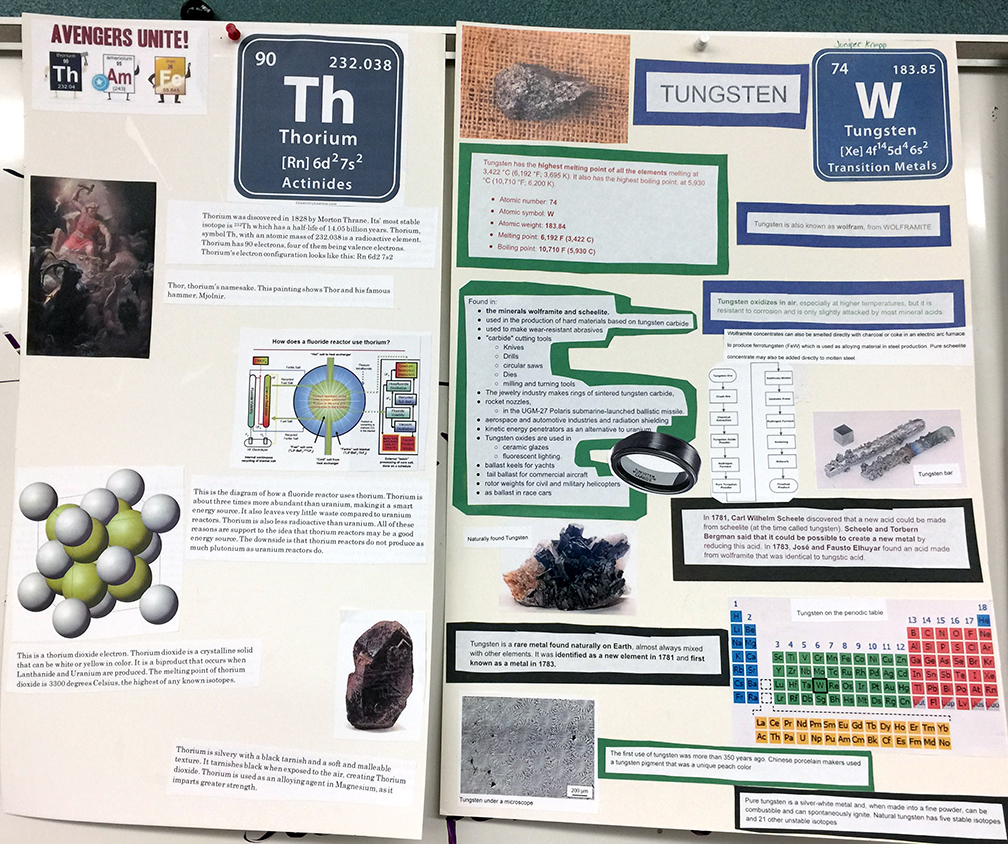
Student posters on thorium and tungsten. I especially like the Avengers Unite cartoon with Thor-ium, Captain Americium, and Iron Man.

On the same unit on chemical elements, a student choose to create a Scratch game on the element Bismuth called Billy’s Bismuth Bellyache, where answering questions about bismuth correctly led to the gradual building of a bismuth subsalicylate molecule (the active ingredient in Pepto-Bismol). She designed her graphics, stage, costumes, and created all of the coding necessary to play the game. Another student used Scratch to create an interactive word-search puzzle on Strontium or a Heal Dem Bones game for calcium.

A group of students in an A.P. Chemistry class compiled a joke book with cartoons, puns, limericks, poems, and song lyrics related to quantum mechanics. This was based on an offhand comment in the Star Trek: The Next Generation episode where data tries to learn about humor by studying a stand-up comedian on the Holodeck. The computer mentions that the funniest comedian ever based their jokes upon quantum mechanics. So I wondered if we could do that. Eventually, this will become a whole animated cartoon hosted by Boson the Clown to a crowd of electrons as they laugh their way to higher orbitals.
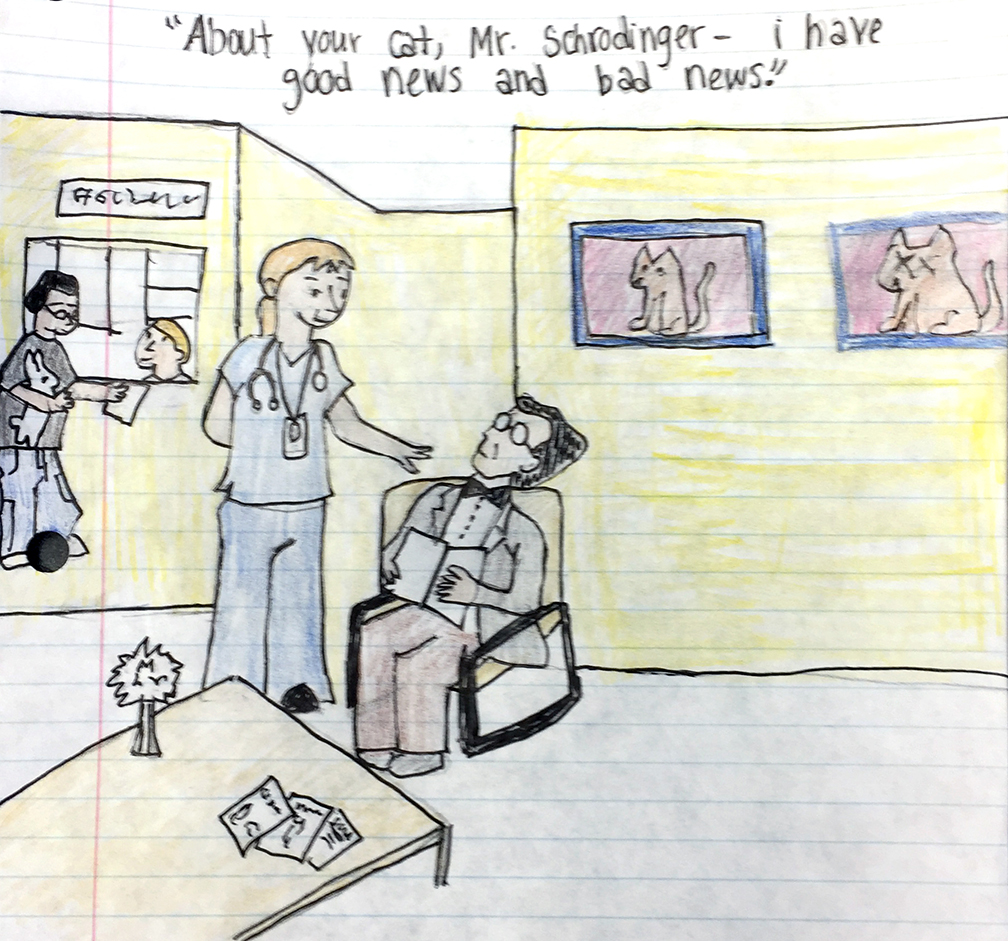
One of the cartoons from the quantum joke book. The character in the chair is a pretty good Schrodinger!

I have had student groups build banners on the history of chemistry, design HyperCard stacks (there is an old one for you) on the elements and their compounds, create videos on elements, create 3D models of molecules and ancient Greek matter theorists, do interviews of experts on the history of chemistry, visited chemical manufacturing plants such as beryllium refineries, cement plants, bronze statuary workshops that use the lost wax technique, chocolate factories, and artificial diamond manufacturers. All of these projects are based on some form of media design. As time goes on, I have done more to encourage student choice of medium and have seen incredible results.

Yet all of these great examples are anecdotal – wonderful stories, but not constituting the type of proof needed by other chemistry teachers and science department chairs to adopt student-created digital media projects (SCDM). This is where my dissertation comes in – I hope to gather statistical evidence that other teachers can effectively adopt these same ideas for SCDM projects and 3D choice in their own classrooms, and that they will see enhanced student creativity, engagement, and learning. Once my proposal is approved, I will establish a science-communication contest at the planetarium for sixth-grade students to demonstrate their understanding of space science concepts (part of the sixth-grade science standards). I will gather data from their projects and student peer assessments to see if creating these projects leads to increased test scores as evidence of learning. By this time next year, this dissertation will be completed and defended and I will be a large part of the way to proving my hypothesis. Then I can return to exploring the elements once again and think of retirement and traveling to more mine sites.
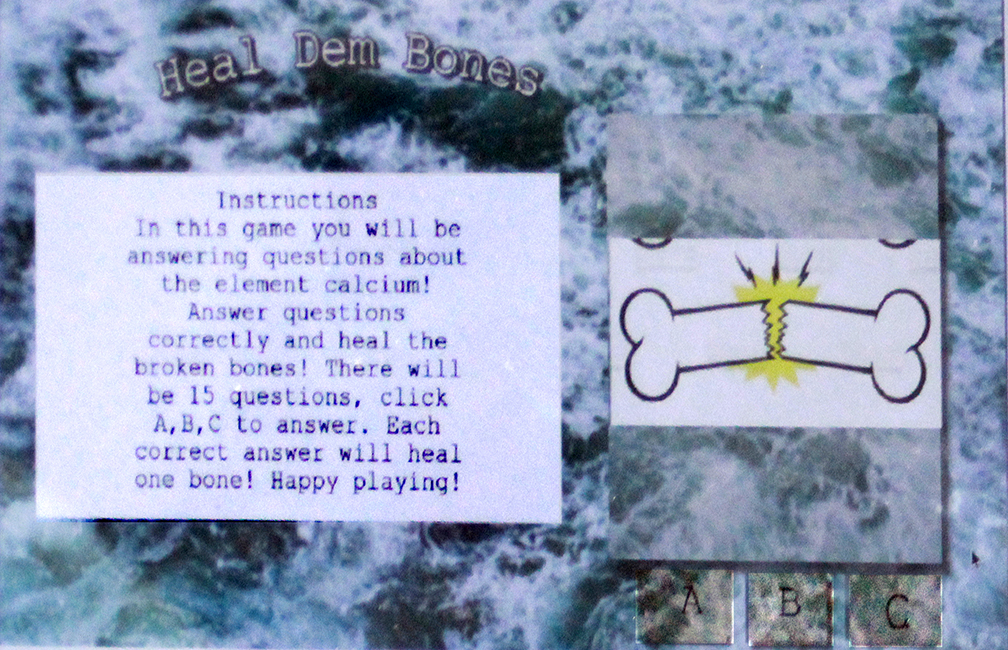
The main interface for the Heal Dem Bones game on calcium. The student designed the graphics and buttons and programmed the game, so that by answering questions about calcium, you heal a set of broken bones.

In the meantime, I will report on the elements as much as possible, but my posts will continue to be sparse until then. Bear with me; the end will be worth the wait. I hope the examples shown here will inspire you to try out new ideas and use some student choice of what types of media projects they will create. For any unit, you can specific the topics (or your state standards can) and let students choose their specific topic, medium or software, and their approach. You will be amazed, as I have been.
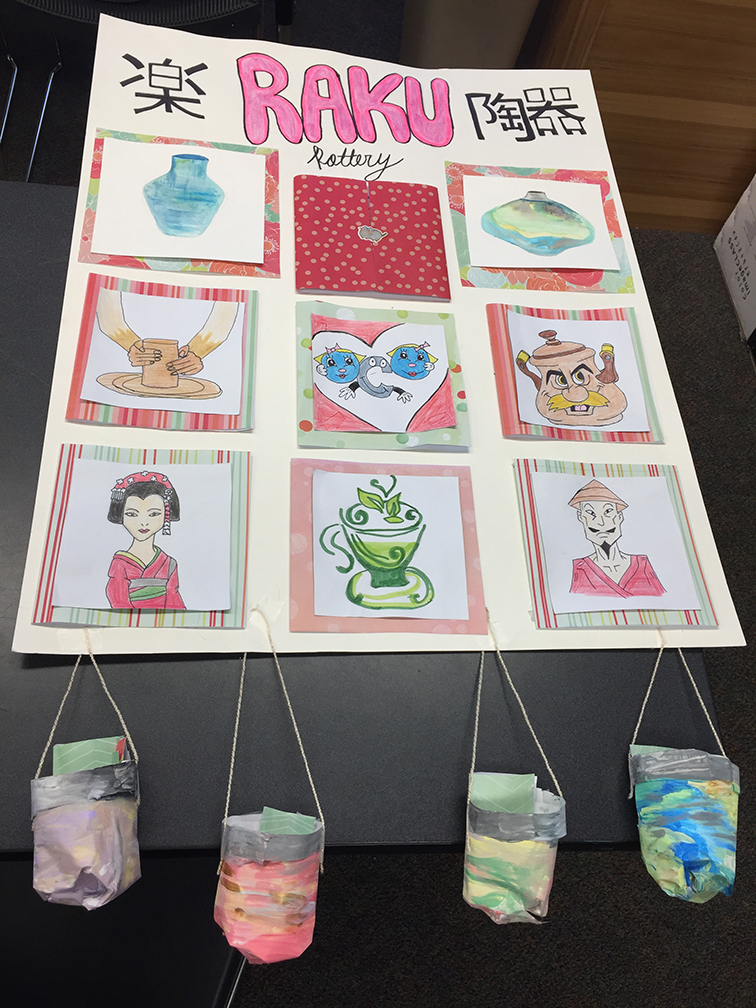
An interactive poster on Raku pottery for a unit on the history of chemistry. Even a standard project like a poster can be enhanced if you allow students to use their creativity. This poster has windows you can open to see questions, with answers in the pots below.

Read Full Post »

David Black by planetarium van
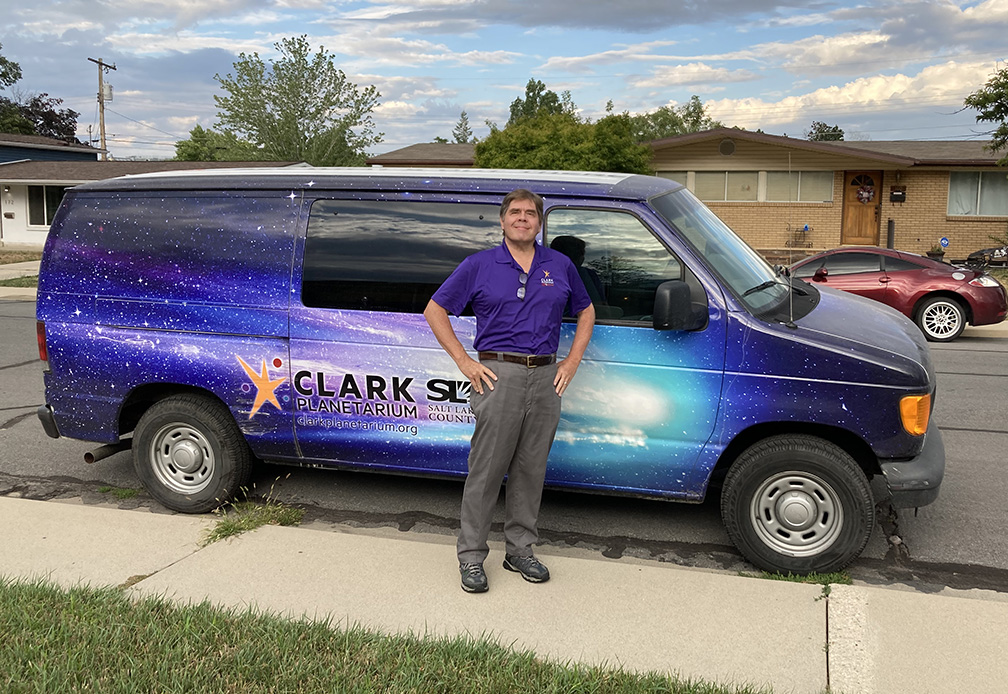
David Black next to the Clark Planetarium comet van, on the way to deliver solar eclipse glasses.

This site, elementsunearthed.com, has been down for a few months. I apologize for this; it came about due to unfortunate timing and a bad site certificate.

My wife’s credit card, which was being used for the auto payment on this site, was hacked and she needed to get a new card. Unfortunately, this happened just as the auto payment on the old card tried to go through with WordPress. Since the card had been cancelled, the autopayment failed and I didn’t realize this for over a month. In the meantime, the domain lapsed and Go Daddy hijacked the site. If you tried to visit between about last November, 2023 and the end of March, 2024, you would have seen the Go Daddy logo instead of my banner.

When I realized the problem, I corrected the credit card link and re-upped my payments. But the site did not autocorrect as the certificate was incorrect. Originally it was set up with my email from a school where I no longer work, so the certificate would not validate. It took several tries to finally correct that error and update my email. I think everything is working again.

There is just one more problem, which is that my entire media library has become unlinked. So now all of my posts are back, but with a little help from the people at WordPress, I hope to get everything working again soon. Please be patient!

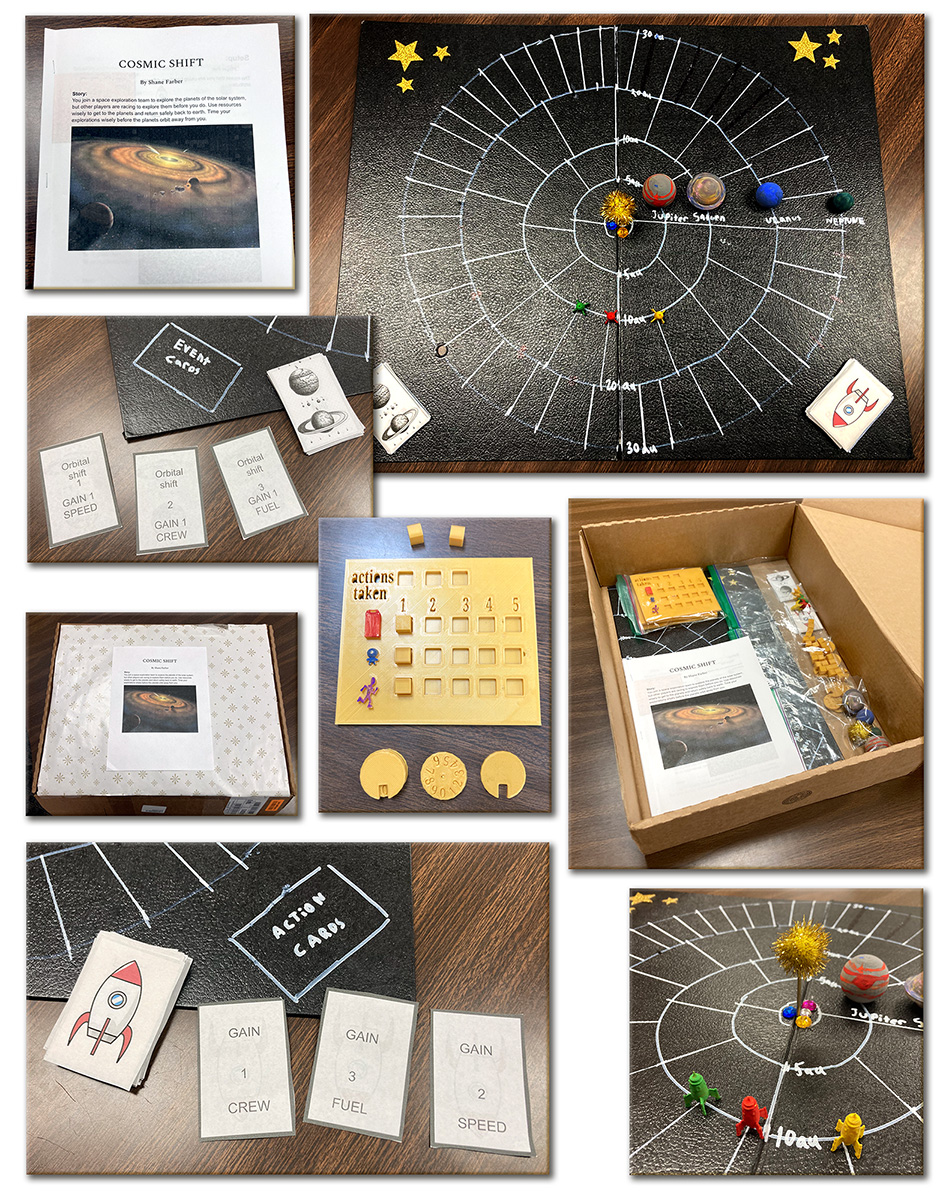
The Cosmic Shift game chosen as the Best of Show by our panel of judges.

I have been pulled away from much activity on this site due to my continuing efforts to get my doctoral dissertation completed. The first three chapters, which are essentially my proposal, are almost done. Chapter 2, the literature review, only needs a few more sections pasted in with a bit more editing, maybe 2-3 days worth, and I will send it off to my committee chairperson, Dr. Farber. Chapters 1 and 3 have already been sent, although they need editing. My goal is to have all three in shape by the end of May (2024) and in the hands of my full committee by the start of June. I would like to set up the proposal defense by the end of June, get the proposal to the Institutional Review Board (IRB) and gain approval by the end of August, then start my actual dissertation research by September. The data gathering will conclude by the end of November, with analysis and write up of the final chapters next spring. I hope (knock on wood, cross my fingers, throw salt over my shoulder, and anything else I can think of) to defend the final dissertation by this time next year.

It has been a long and winding road (cue the Beatles) and more than one complete change of plans. But there is finally coherence in my proposal and plan. I have simplified and cut and slashed until only the essential core remains, which is to study how teachers implement student-created digital media projects in STEM classrooms. This will be done through a Cosmic Creator Challenge at Clark Planetarium in Salt Lake City, where I now work as an Education Program Specialist. 6th grade students will demonstrate their mastery of space science standards through creating their own digital media projects using three dimensional choice (choice of topic, choice of medium, and choice of approach). They will present their projects to peers for critique, then make revisions and submit them to the education department at the planetarium for final judging.

A 3D model of the reasons for the seasons, one of the 6th grade space science standards.

We held a pilot program this fall (2023) and the results were excellent, giving me confidence that my plan will work. We saw definite indications of enhanced student creativity and engagement, as well as the effectiveness of three-dimensional choice. We did a pre-and-post test design and scores improved 7.9%, which is about par for project-based learning. Now I just have to convince my committee to let me do this for my dissertation research. I have created a whole new blog site to provide resources and information on the Challenge, and it is at: https://science-creativity.com. Check it out and let me know how you like it and if you can use any of what is there. It has links to flipped software training videos I made last year and ideas for student projects. I will post updates soon on how this first year’s contest went and give information on next fall’s challenge. My site on space science lessons and activities is continuing (https://spacedoutclassroom.com) and has been updated more often since I am now at the planetarium.

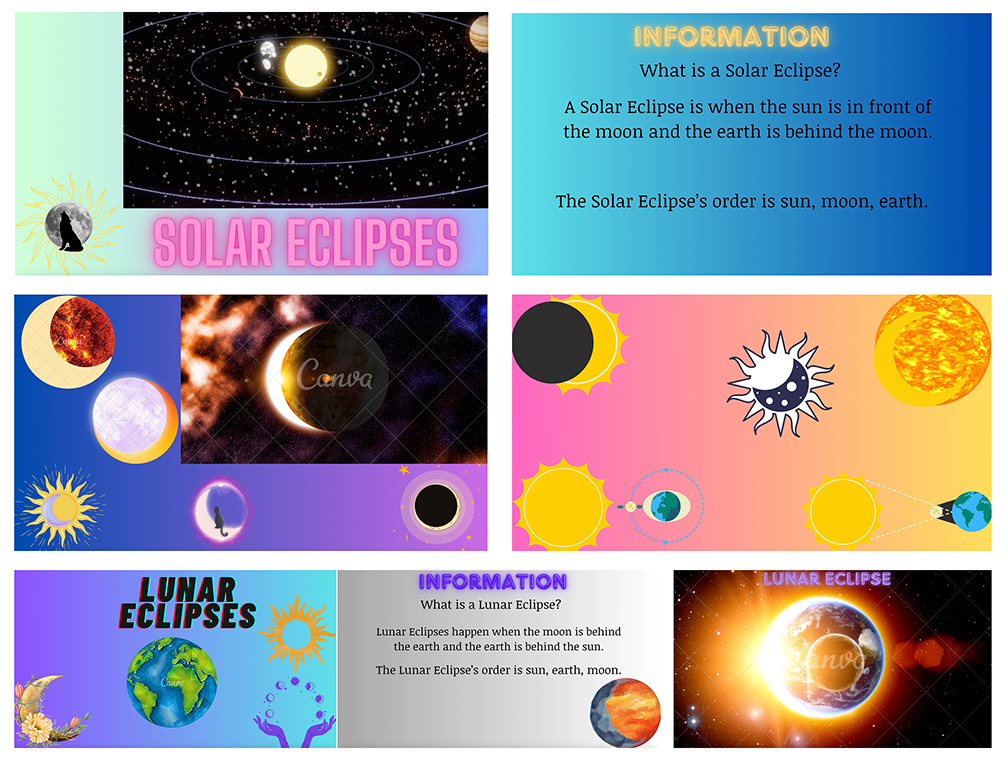
Frames from a Canva project on eclipses that won the video category.

Again, I apologize for this site’s unavailability and my lack of attention to it. I have quite a few updates on the elements and places I’ve visited (such as California’s gold country and Bodie, CA) in the past few years, which I will start to add as soon as my dissertation proposal is approved and I have some breathing room again. In the meantime, we are finally back in business.

Read Full Post »

Trans-Pacifica, Part IV: Date Unknown

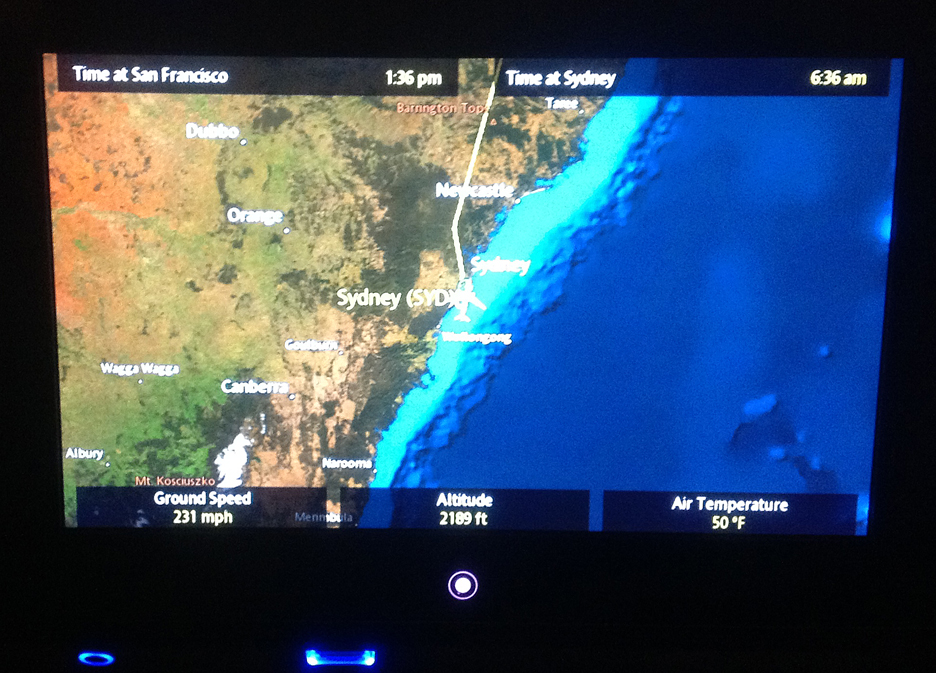
Interactive flight map

Interactive flight map of our approach to Sydney Airport.

Our alternate flight on our journey to Jakarta took off on time, departing at 10:50 pm from Gate 92 at San Francisco’s International Terminal. It will be a 14.5-hour flight to Sydney, Australia on one of United Airline’s newest Boeing 787 jets. We were able to upgrade to Economy Plus class for a little extra legroom. Mike said it could be measured in inch-hours – how may extra inches of legroom you get per hour. I said we should make this the Metric Unit of relief from discomfort.

It’s a beautiful airplane, and one with digital screens in the back of the seat, which allow you to choose and watch a wide variety of movies and TV shows. I finished watching the National Geographic “Mars” series and watched “Rogue One” as well as trying to get some sleep. My daughter’s pillow came in handy, or my bum would have been even more sore than it already is. When I couldn’t stand it any longer, I got up, used the bathroom, and stretched out my legs. I’m glad I went to the gym and worked my legs out well Wednesday morning.

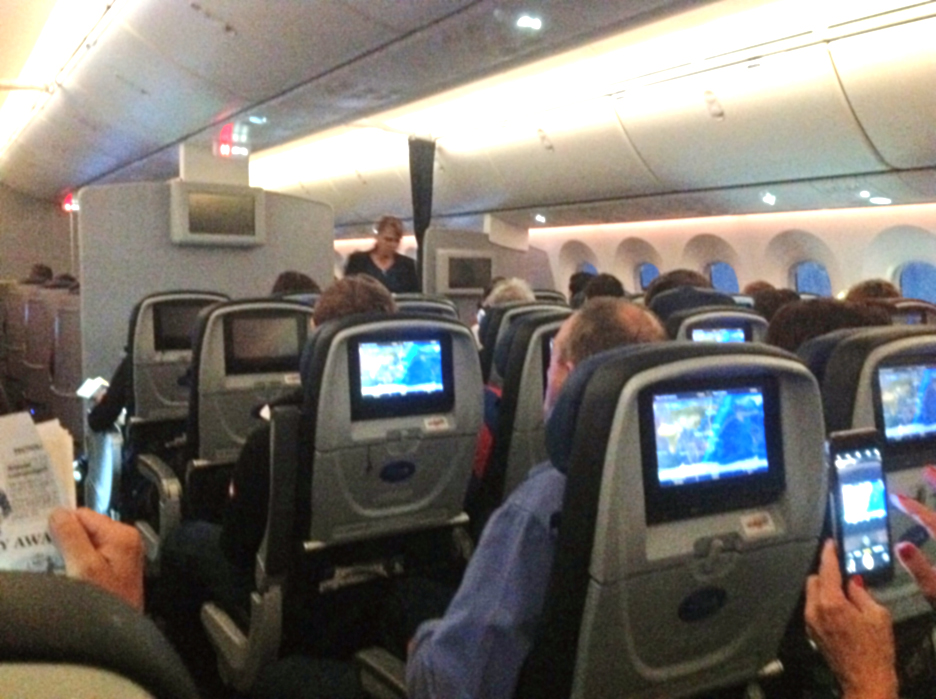
Sydney flight economy class

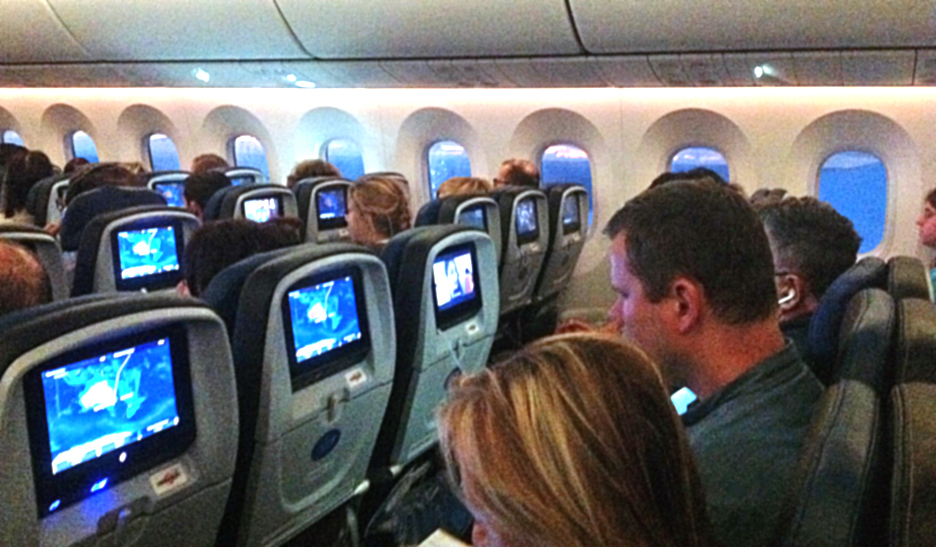
The economy class section of our 777 to Sydney. Most passengers are looking at the interactive map as we approach Sydney airport. We followed a great circle route across the Pacific Ocean.

It was interesting to chart our progress. One of the apps showed the current position of the airplane on a world map, alternating between close and worldwide views, and giving constantly updated information on airspeed, wind speed, distance traveled, distance yet to go, and the current time at our destination. Our own current time was a bit relative. It also showed the night and day portions of the world map, and I saw how we were chasing the night, heading southwest. This was the longest night I’ve ever had – about 18 hours all told from sunset in San Francisco to sunrise in Sydney. But as fast as we were going (about 540 mph), the Earth rotates faster. At the equator, it rotates about 25,000 miles in 24 hours, or 1100 miles per hour. At Utah’s latitude, it is more like 700 mph (I worked it out once – a nice problem in geometry for students). That means that even though we were chasing the night, dawn would eventually catch us. I saw how the dawn terminator moved slowly across Utah and California, across the Pacific, gradually but inexorably running us down.

We crossed directly west of Hawaii and headed southwest to Brisbane, then down the coast to Sydney. At some point we crossed over the equator – my first time to the southern hemisphere. I look forward to seeing the Southern Cross for the first time. Isn’t there a song about that? At about the same time, we intersected the International Date Line and lost a day. We’ll get a day back going home, but I will never know Friday, July 14, 2017. Jakarta is 13 hours ahead of Utah, almost halfway around the world and in a different hemisphere entirely.

We arrived on schedule at Sydney, circling around to land from the south as dawn began to brighten a pink-orange eastern sky. We checked our carry-ons through the International terminal and are now waiting for our flight: Garuda Air 714 out of Gate 50 to Jakarta at 11:00, if everything goes well.

Mike looks at map

Mike (center) following our progress on the interactive map.

I tried to talk with a retired law professor from Beijing who is flying with her daughter and two grandsons to Boston. My Mandarin Chinese is rusty, but we made ourselves understood. She has been to Taiwan before, where I lived for two years, and even visited Ah Li Shan there. I’ve been to Ah Li Shan and seen the sunrise over the mountains. It is a thought-provoking coincidence that two people from such distant places and backgrounds could have our lives intersect in these interesting ways. I once wrote a blog post about this – how as teachers we hope to be understood most of the time by our students, but how all individuals live in separate worlds that only intersect occasionally, and trying to communicate through these intersections is like trying to teach someone from another planet. My post is located here: Riding the Shadow Line.

How can I hope to intersect and communicate with students in Borneo, when we are from such different worlds? That is why my guiding question is to look for the commonalities between us, and science will be one such intersection. The laws of science are universal, and many of the words and processes are also universal. I hope to find other intersections, other points of common ground.

Sydney pre dawn

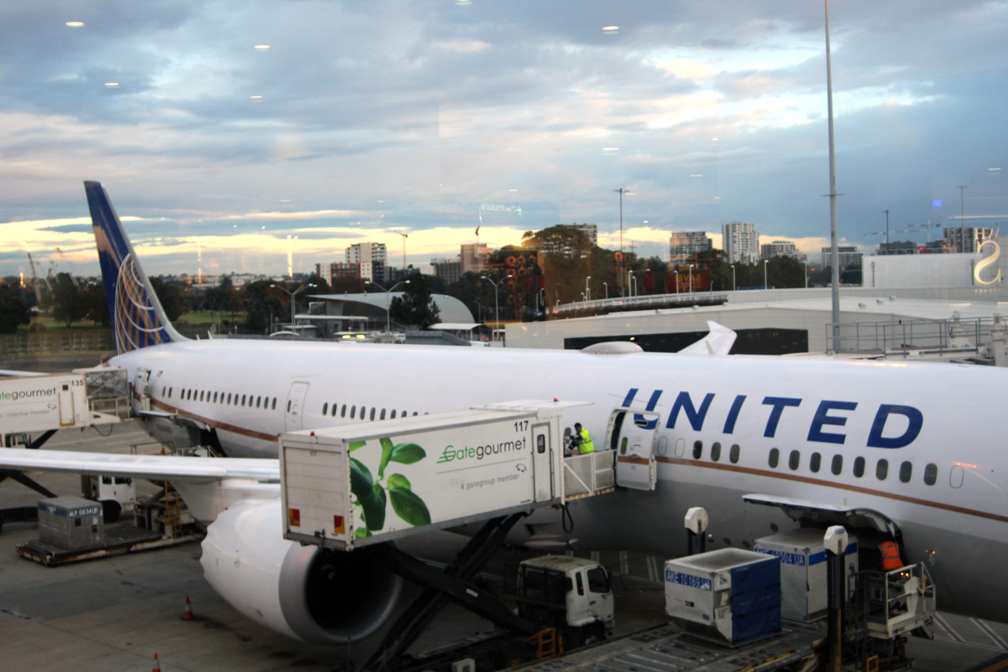
My first view of Australia from Sydney Airport.

Here’s hoping our flight today goes well and we arrive in Jakarta as scheduled. After our adventures over the last day, I won’t take that for granted any more. But then, this whole trip will be one adventure after another. They say adventures are what happen when things don’t go as planned. And they won’t, especially traveling to an unknown place to work with unknown people. Bring the adventure on! More stories to tell!

Read Full Post »

Trans-Pacifica, Part III: Wednesday, July 13, 2017

After waiting in an excruciatingly slow line to get our alternate tickets, we had to work our way through Security again. We made it all the way through and discovered we had forgotten to empty our water bottles. I had completely forgotten, because I hadn’t thought I’d need to go through Security again. So I volunteered to go back out, dump out our bottles, and go back through. Fortunately, it was faster the second time

Alicia and Mike had gone on to Gate 92 for our 10:50 flight and had gotten some supper already. After plugging in my laptop to start re-charging it, I went upstairs and stood in line at a marketplace to get some fresh pizza. I was about to order when I heard someone calling “Dave! Dave!” I turned around and saw it was a former student of mine from Walden School named Libby. She graduated about four years ago, and has since finished her associate degree and is traveling to Bali through China to celebrate. Although I’m going to Bali, too, we won’t be there at the same time. She told me of others from the school that I had taught, and that she hopes to go on the one of the University of California schools and eventually get a law degree

It was great to see her, and what a coincidence to run into her here of all places, on her way to the same place I’m going. I got thinking about the influence I’ve had over 26 years of teaching, the number of students I’ve taught directly, the number I’ve impacted indirectly through workshops and other professional development activities I’ve done for their teachers, and how many people have read my blog posts and at least been slightly influenced. I tried to calculate this altogether and came up with somewhere between 750,000 and 1,000,000 people whose lives I’ve at least touched to a small degree, and thousands of people I’ve taught directly. This blog has been visited by hundreds of thousands of people itself, and my videos on YouTube have been seen by tens of thousands more. Now I’m traveling half way around the world in the hope that I can spread a bit of global perspective. Ultimately, however, it comes down to one student at a time, one day after another, one more chance to influence someone for good.

Read Full Post »